
3D printing or moulding for a short production run?
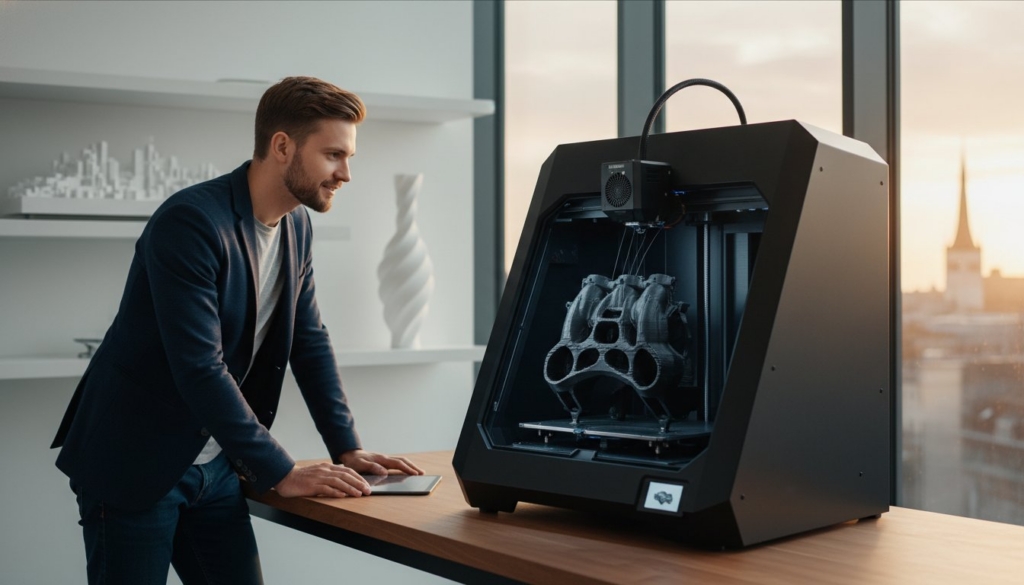
Suppose you need eight holders for a shop display, and two shelves are narrower than the others. A mould made for one size doesn’t automatically solve the other two. That’s the sort of question behind a choice between 3D printing or moulding. Count how many identical pieces you need and how many are really variants.
When changes are still likely
With filament printing, a workshop can change a dimension in the file and make another version without building a new mould. That can suit a display stand, an unusual shelf fitting or a model you want to hold before approving the shape. It also means each item still takes machine time. Doubling the order doesn’t make that time disappear.
Use the first print to check the things a screen can’t settle. Does the holder fit the shelf lip? Can a customer lift the item out? From the viewing side, do you see a smooth face or a row of support marks? If people will handle the piece, decide whether the layer lines are acceptable or whether finishing belongs in the price. PLA and PETG are possible filament choices, but the application and required finish should lead that conversation.
| Job | A useful comparison |
|---|---|
| One model with an uncertain shape | Print a first version and check it in person. |
| A handful of personalised pieces | Keep a shared base file and name the changing parts. |
| Many identical parts | Compare the complete batch price and finish with a moulded option. |
When the same part will be repeated
For a stable design and many identical pieces, ask a manufacturer to quote moulded production as well. Include tooling, the first sample, the whole batch and any finishing. The point where one process becomes cheaper is different for a small, simple item and a large, awkward shape. A fixed break-even number from an unrelated product won’t tell you much about yours.
If you’re unsure how many will sell, separate the quantity needed now from a possible later run. A handful of printed pieces can let you check fit, appearance and demand before committing to tooling. Keep the approved sample and version number, especially if several sizes share the same basic model.
For short-run 3D printing in Tallinn, send the dimensions, total quantity, number of variations and the face that needs to look its best. Tell us whether the design is final or still open to change.


