
Choosing stickers for kids’ rooms, notebooks and reward charts
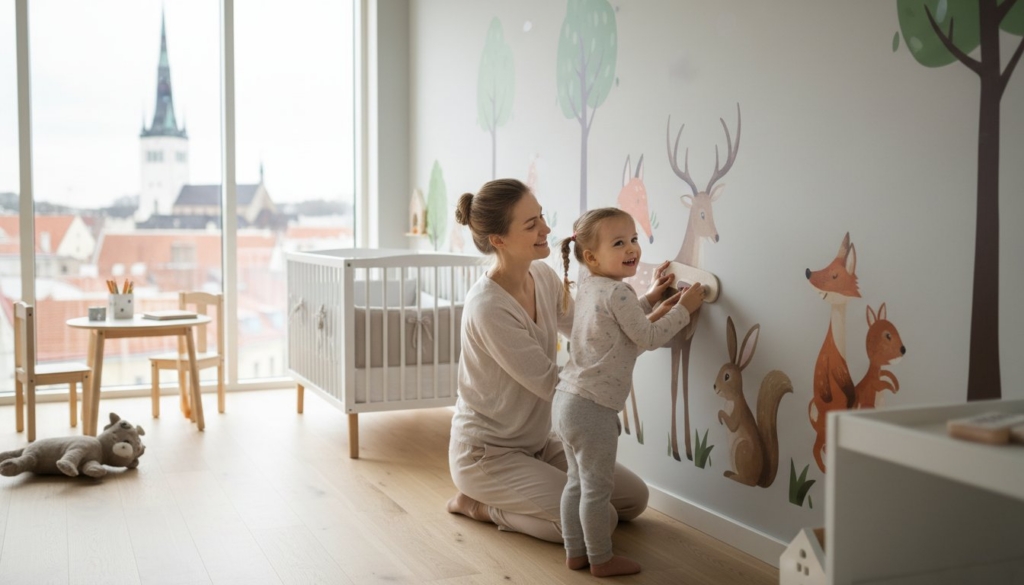
A child might want a fox beside the bed, their name on a notebook or a sheet of tiny stars to mark reading days. Those are three different sticker jobs. Before picking a theme, decide who will handle the sticker, where it will go and whether you want to move it later.
A wall sticker has to suit the wall
For a bedroom, put a paper cut-out on the wall at the size you’re considering. Look at it from the doorway and from the child’s height. One large animal can work in the space above a shelf where a whole forest would disappear behind books. Separate stars or leaves give you more freedom around furniture.
Smooth, sound paint is a better starting point than a flaky or heavily textured finish. Wait for new paint to cure according to its manufacturer’s instructions, then try a small piece in a discreet spot. A weak paint layer can lift when a decal comes down. Keep loose pieces and backing sheets out of young children’s reach and choose stickers intended for their age and activity.
| Project | Try this first |
|---|---|
| Wall scene | Tape up a paper shape and test an offcut on the paint. |
| Reward chart | Check that a child can peel and place a single sticker. |
| Sticker book | Pair reusable stickers with pages designed for them. |
Make the activity easy to use
For a reward chart, try peeling one star from the sheet. Can the child lift it by the edge? Can they see which square it belongs in? A sticker book meant to be rearranged needs both a reusable sticker and a compatible page. Ordinary paper stickers usually become a permanent part of the picture.
For something personal, a child’s own drawing makes a lovely starting point. Scan it or photograph it square on in even light. Keep a copy of the original and mark which lines, colours or handwritten words should stay. A simple outline can be easier to recognise at notebook size.
Planning a set for a whole playroom or classroom? Our kindergarten wall graphics page shows how to brief a larger project. Send the wall dimensions, a photo and the age group so we can talk through the scale and material.


