
Sticker design that stays readable at actual size

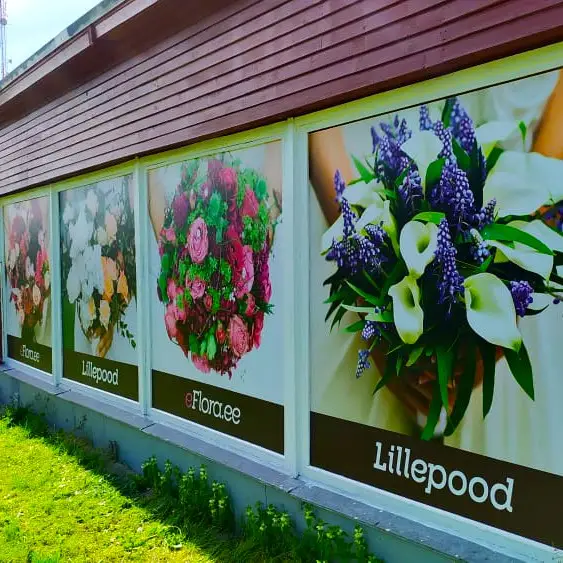
In the florist’s window pictured here, the photographs of bouquets tell you what the shop sells. The lettering can then do a different job and tell you its name. That’s a useful way to think about sticker design. Decide which element can carry the message before you add more words.
Read it where the customer will read it
A label on a small jar is usually held in the hand. Opening hours on a shop door may be read from the pavement. Print the design at its final size, cut out the shape and hold it against the real background. Step back to the intended distance. Ask someone seeing it for the first time which word they notice first. If it isn’t the important one, adjust the size, contrast or layout.
Check the outline as well as the type. A close contour around an illustration can look neat but leave little room for text. A simple rectangle may give a product name and instructions more breathing space. Look at the proof under the lighting the sticker will get. Gloss can catch reflections, and clear film changes with the colour behind it.
Proof the details that are easy to miss
Read names, dates, opening times and contact details separately from the design review. If a code is meant to be scanned, test the final size on a mock-up of the actual surface. Check that no essential text sits against the cut line.
Compare two versions on the shelf
Suppose your jam comes in strawberry and raspberry. Put the two mock-ups on filled jars, side by side with the other products on the shelf. Ask someone to pick out the raspberry jar and tell you how they recognised it. If they have to turn both jars round, try moving the flavour name or changing its contrast. Keep the wording and price the same while you test a change of colour, so you can tell which detail helped.
When sending a design for sticker printing, include its purpose, dimensions, quantity, original logo, wording and any colour reference. A photo of the surface explains the background and viewing angle. Finish with the date you need to receive the print and identify the exact file you want the printer to use.


