
Car wrap or respray for a colour change?
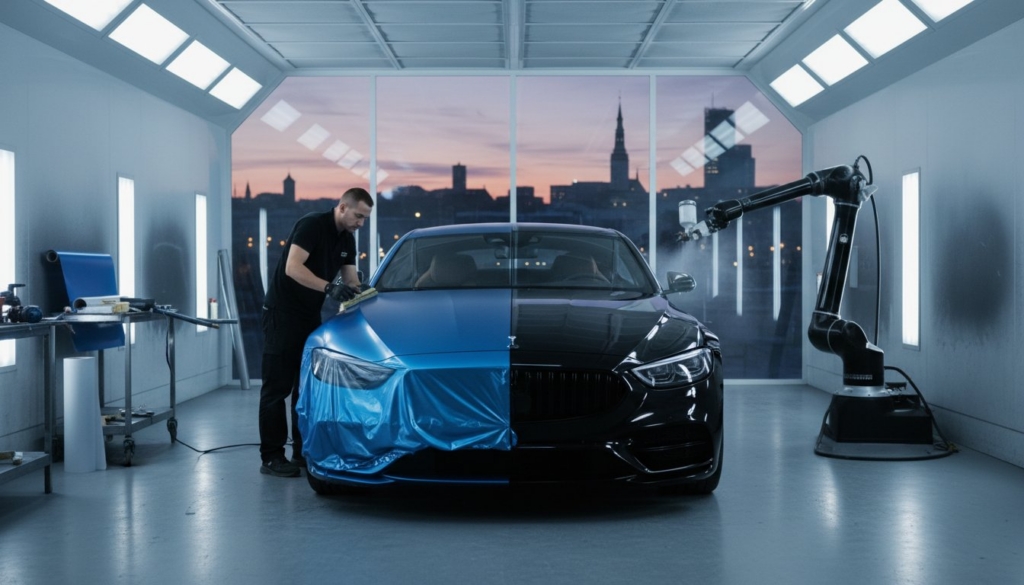
Open the driver’s door on a white car you’ve just pictured in dark green. Do you expect the door opening to be green as well? If you do, say so before asking for a quote. A car wrap or respray can both change the colour you see from the street, but the job behind that door can be very different.
Start with the paint you already have
Wrapping suits a car with a sound finish when the owner wants a different colour or texture. The fitter cleans and prepares each panel, applies the film and finishes the returns and edges. Vinyl follows the surface underneath. A dent, flaking clear coat or raised rust spot can remain visible, and removing film from weak paint can disturb it. Tell the fitter about any previous repairs.
A respray makes more sense when paintwork needs repairing or when you want a permanent finish across repaired panels. A body shop can assess corrosion, prepare the base and blend or repaint the relevant areas. If the damage is confined to one panel, get that assessed before comparing prices for changing the whole vehicle. Fresh paint also needs an appropriate curing period before any film goes over it.
| Car and goal | Starting point |
|---|---|
| Sound paint, temporary colour change | Compare samples of removable automotive wrap. |
| Corrosion, peeling lacquer or dents | Ask a body shop to assess the repair first. |
| Sound body, permanent colour change | Compare the scope of a respray with full exterior wrapping. |
Compare the same scope on both quotes
Write down what should change, including mirrors, bumpers, door returns and any places where the original colour must stay hidden. Ask what needs to come off the car, who refits it and how long the vehicle will be away. A modest exterior wrap and a respray including the openings are different scopes, however similar the colour samples look.
A wrap can make a future colour change easier, especially on sound factory paint. A respray can restore a failing finish and becomes the underlying colour. Neither route avoids normal washing or repairs. See physical samples in daylight and ask how a single panel could be repaired if it gets damaged later.
Look at a sample on the panel you want to change
Take the wrap swatch to the car and hold it against a curved panel as well as a flat one. Check the tone outside and beside any trim that will stay its original colour. If a scratched bonnet is the reason for the change, show it to the body shop and the wrapper separately. Ask each to describe the preparation it needs before comparing the two prices.
For a car wrapping assessment in Tallinn, send a photo of the whole car, a close-up of its worst panel and an open-door view. Those three pictures make a far better starting point than the colour name alone.


